

The best garage door for a Winnipeg winter: insulation, R-value and seals
Shopping for a garage door that copes with a prairie winter? Here is what actually keeps the cold out, how to read R-value and U-factor, and when an old door is done.
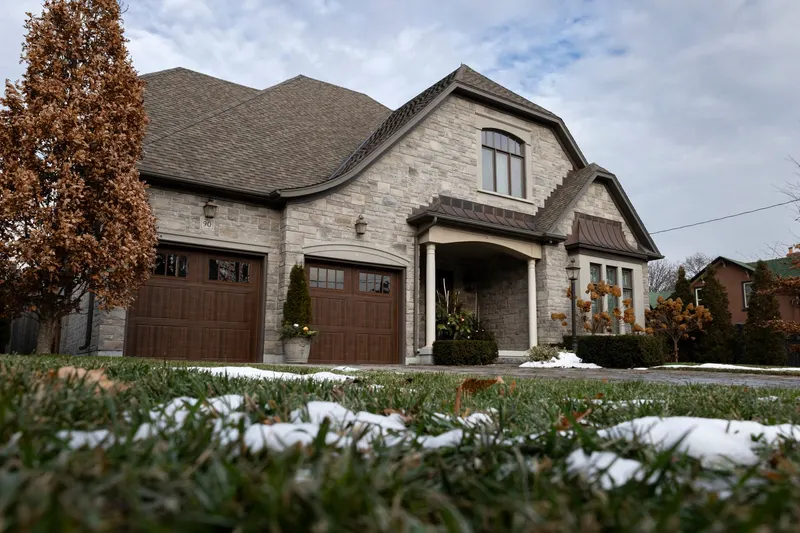
Here is how to read the brochures, what holds up at minus thirty, and when your old door has earned its retirement.
What actually keeps a garage warm in winter?
Three things, roughly in this order of what you'll notice:
- Seals. A door full of foam still leaks cold if there's daylight under the bottom seal or down the sides. On a prairie winter night, wind finds every gap.
- Insulation in the panels. Polyurethane foam injected into the sections, or polystyrene boards fitted inside them. Insulation also makes the door stiffer and quieter.
- Thermal breaks. A strip that separates the steel skin on the outside from the steel skin on the inside, so cold doesn't simply conduct straight through the metal.
If your garage is attached to the house, heated, or has a bedroom above it, all three matter. If it's a detached, unheated garage at the back of a river lot, seals that keep snow and wind out may matter more than the foam.
What does R-value mean on a garage door?
R-value measures how well a material resists heat flow: higher is better. The catch is how garage door makers get the number.
The door industry's own technical sheet, from the Door and Access Systems Manufacturers Association (DASMA), describes two different methods (DASMA TDS-163):
| Measure | How it's found | What it covers | Better when |
|---|---|---|---|
| R-value | Calculated | One door section only | Higher |
| U-factor | Lab tested | The whole installed door, joints, seals and all | Lower |
DASMA says the calculated section R-value does not account for section joints and stile attachments, and that the two numbers are not reciprocals of each other. In plain words: a high R-value on a brochure tells you about the foam in the middle of a panel, not about the joints, the edges and the seals where most cold actually gets in.
So when you compare doors:
- Compare R-values only within the same kind of construction.
- If a maker publishes a tested U-factor, use it. Lower means less heat lost through the whole door.
- Ask how the door seals at the bottom, the sides and between sections. That's where a cheap door and a good one really differ.
Call or text and a person answers, 24 hours, 7 days. You approve the price before we start.
Steel, wood or composite: what copes with minus thirty and road salt?
Insulated steel is the most common choice in Winnipeg for good reason. It's light for its size, it takes insulation well, and a good factory finish stands up to slush and salt splashed off the driveway. Look for a thicker steel skin if your door takes knocks from kids, bikes or snow blowers.
Wood looks beautiful on a character home, but it moves with moisture and needs refinishing to keep water out. A wood door that's let go will swell, stick and crack faster in our freeze and thaw cycles.
Composite and wood-look steel give the carriage-house look with steel or composite underneath, so you get the style without the upkeep.
Aluminum and glass doors are striking, but large areas of glass and metal frame let more heat through than solid foam-filled panels. They suit a detached or unheated garage better than one under a bedroom.
Do windows and colour make a difference?
Windows let light in and heat out. If you want them, insulated glass in the top section is the usual compromise.
Dark doors absorb more sun. On a south or west face that can mean a warm door in July. Before you choose black, ask whether the maker has any conditions on dark colours for that door model, and read the warranty.
What opener and springs does a heavier insulated door need?
An insulated door weighs more than a hollow single-skin door of the same size. Two things have to match that weight:
- Springs. The springs, not the opener, lift the door. They are sized to the door's exact weight and height. Putting a new heavy door on old springs is how you end up with a door that won't stay halfway up, or a spring that fails early. Our guide on how long garage door springs last explains cycle ratings and why a busy door may want higher-cycle springs.
- The opener. Belt drives are quiet, which matters under a bedroom. Chain drives are simple and tough. Wall-mounted openers sit beside the door on the torsion bar and free up the ceiling. Whichever you choose, a battery backup is worth asking about for power outages. If your current opener is already struggling, see garage door opener not working before you decide what to keep.
When is it time to replace rather than repair?
Most garage door problems are repairs: a broken spring, a frayed cable, worn rollers, a tired opener. Replacement makes sense when:
- Panels are cracked, rusted through or rotted at the bottom.
- The door is a single skin with no insulation and the garage is attached, heated or lived above.
- Sections are bent from a car or a snowplow and no longer track straight.
- Parts for the door are no longer made.
- You're changing the garage's use: a workshop, a gym, a heated space.
Even a new door needs looking after. Our winterize your garage door guide covers the ten-minute fall check that keeps seals, springs and the opener ready for January.
How do you choose the right door for your home?
Start with how you use the garage, then measure. We'll look at the opening, the headroom, the side room for the tracks and springs, how the garage is heated, and what's above it, and then talk through insulated door options that fit. If you're ready to look at a new door, see new garage door installation. The install includes matching the springs to the new door's weight and setting the opener to suit it.
Questions people ask
- What R-value garage door do I need in Winnipeg?
- There is no single magic number, and garage door R-values are calculated on one section of the door rather than tested on the whole door. For a cold climate, choose an insulated door with a thermal break and good seals, and if the maker publishes a tested U-factor, use it to compare doors: lower is better.
- Is an insulated garage door worth it?
- For an attached garage, a heated garage, or a room above the garage, an insulated door with good seals makes the space more comfortable and the door quieter and stiffer. It also protects the bedroom or entry door that shares a wall with the garage from the worst of the cold.
- Should I repair or replace an old garage door?
- Repair when the panels are sound and the problem is a spring, cable, roller or opener. Replace when panels are cracked, rotted or rusted through, the door is uninsulated and the garage is attached or heated, or parts for it are no longer made.
Ready to sort it? Call or text.
Open 24 hours, 7 days. Text a photo first if that is easier.
New garage door installation · You approve the price before we start.
Keep reading
All guides Right now
Broken garage door spring: how to tell, and what not to touch
A broken spring is the garage door problem you should never fix yourself. Here is how to recognise one, and what to do while you wait.
 Right now
How to use the garage door manual release (and when not to)
The red cord on your garage door opener lets you open the door by hand in a power outage. Used the wrong way, it can drop a heavy door. Here is the safe order.
 Right now
Garage door opener not working? Check these first
Most dead openers come down to a handful of simple causes. Work through them in order before anything gets taken apart.