

Stuck right nowGarage doors
Broken garage door spring: how to tell, and what not to touch
A broken spring is the garage door problem you should never fix yourself. Here is how to recognise one, and what to do while you wait.
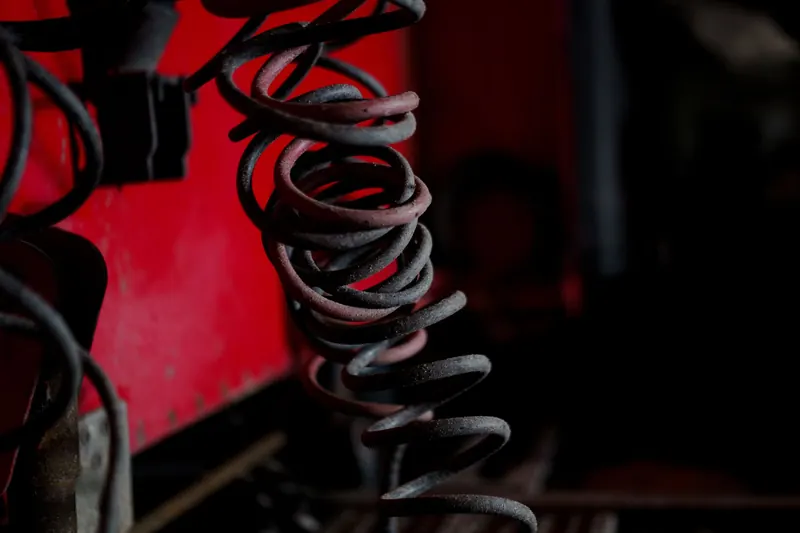
What are the signs of a broken garage door spring?
Most people notice one or more of these:
- A bang from the garage, like a gunshot or something heavy falling, often with nobody near the door. Amarr notes that a broken torsion spring may make a loud bang while the pieces stay on the bar (Amarr).
- A gap in the coil. Look at the spring above the door. A whole spring is one continuous coil; a broken one has a visible space, as if a section had been cut out.
- A door that suddenly weighs far more. A balanced door lifts easily by hand. With a broken spring it can feel like dead weight.
- The opener strains, lifts a few inches, then stops or reverses, or the motor runs and the door barely moves.
- A crooked door, higher on one side, or cables hanging loose from the bottom corners.
- The door drops fast when closing instead of settling gently.
You don't need all of them. A gap in the coil alone is enough.
This one is a call, not a fix.
A gap in the coil alone is enough. Don't lift the door or run the opener again.
Garage door spring repairDo I have torsion or extension springs?
Look above and beside the door.
| Torsion springs | Extension springs | |
|---|---|---|
| Where they are | On a steel bar above the door, across the opening | Along the horizontal tracks on each side, near the ceiling |
| How they work | Twist as the door closes, unwind to lift it | Stretch as the door closes, pull to lift it |
| What a break looks like | A gap in the coil on the bar | A spring hanging loose or lying on the floor |
| Common on | Many doors today | Older doors; Amarr calls them the older technology |
Both are dangerous when they fail. A broken extension spring without a safety cable running through it can whip loose, and Amarr warns that parts can fly around the garage.
This one is a call, not a fix.
A broken extension spring can whip loose and parts can fly. Keep clear of it.
Garage door spring repairWhy shouldn't I run the opener or lift the door?
Because the springs, not the motor, lift the door. The opener is designed to guide a door that the springs have balanced. With a spring gone, the opener is trying to haul the full weight of the door, and that can strip its gears, bend the door's top panel or snap a cable.
Lifting by hand is risky for the same reason. Chamberlain warns that if the springs are weak or broken, the door may fall rapidly and without warning (Chamberlain). Garage doors are heavy, and a dropping door can crush hands, feet, a pet or a car hood.
And never try to repair or adjust the spring. Garaga, a Canadian door maker, says plainly that torsion springs can be very dangerous (Garaga), and the winding is done with special bars and procedures for a reason. The cables and bottom brackets are under the same tension.
If your car is trapped inside and you're thinking about the manual release, read how to use the garage door manual release first; the first step there is checking for exactly this.
This one is a call, not a fix.
The springs lift the door, not the opener. A door with a broken spring can fall without warning, so leave it where it is.
Garage door spring repair"It broke on one side but still works." Is that safe?
No. On a door with two torsion springs, the remaining one is now carrying the whole load. The door is out of balance, the opener is straining, and the second spring, which has done exactly the same number of cycles as the first, is under far more stress than it was built for. It can fail at any time, and when it does, there's nothing holding the door at all.
Treat a door with one broken spring as a door with a broken spring: stop using it and book the repair.
This one is a call, not a fix.
The other spring is now carrying the whole load and can fail at any time. Stop using the door.
Garage door spring repairWhy do springs seem to break in the cold?
Springs wear out with use. Each open-and-close cycle flexes the steel, and eventually it fatigues and cracks. Cold doesn't create that wear, but it often finishes the job: a spring near the end of its life, working a door that's stiffer from cold grease and a frozen seal, is more likely to let go on a minus thirty morning. Garaga notes that springs can be affected by rust and cold weather.
The door industry's own technical guidance adds that rust reduces the strength of spring wire and that doors in climates with extreme cold should be kept closed where possible (DASMA TDS-190). A garage door left open on cold days, or a damp garage where springs rust, shortens their life.
How long springs typically last, and how to work out where yours are, is in how long do garage door springs last.
Read this before you try anything else. Not sure? Call and we'll talk you through it.
What does a spring replacement involve?
A proper spring job is more than swapping a coil:
- Matching the spring to the door. The right spring depends on the door's weight, height and drum size. A heavier insulated door needs a stronger spring.
- Considering both springs on a two-spring door, since they've done the same work.
- Checking the cables, drums and bottom brackets, which take a shock when a spring breaks.
- Balancing the door so it stays put halfway up by hand.
- Testing the opener's safety reverse once the door is back in balance.
Garage doors are a 24/7 service. If you've found a gap in the coil, leave the door where it is, keep people and cars clear of it, and book garage door spring repair.
If it's winter and the springs look fine but the door still won't move, the cause is probably something else; see garage door won't open in cold weather.
Questions people ask
- Can I open my garage door with a broken spring?
- It isn't safe to try. The spring is what holds up most of the door's weight, so without it the door is very heavy and can drop suddenly. Chamberlain warns that with weak or broken springs the door may fall rapidly and without warning. Leave the door where it is and call.
- Is it safe to use a garage door with one broken spring?
- No. On a two-spring door, the remaining spring is carrying a load it was never sized for, the door is out of balance, and the opener is straining against the extra weight. Stop using it until it's repaired.
- What's the difference between torsion and extension springs?
- Torsion springs sit on a bar above the door and twist to store energy. Extension springs run along the horizontal tracks on each side and stretch. Amarr describes extension springs as the older technology, found mostly on older homes.
Still stuck? Call, and a person answers.
Open 24 hours, 7 days. Tell us which one it sounds like, or text a photo first.
Garage door spring repair · You approve the price before we start.
Keep reading
All guides Plan ahead
The best garage door for a Winnipeg winter: insulation, R-value and seals
Shopping for a garage door that copes with a prairie winter? Here is what actually keeps the cold out, how to read R-value and U-factor, and when an old door is done.
 Right now
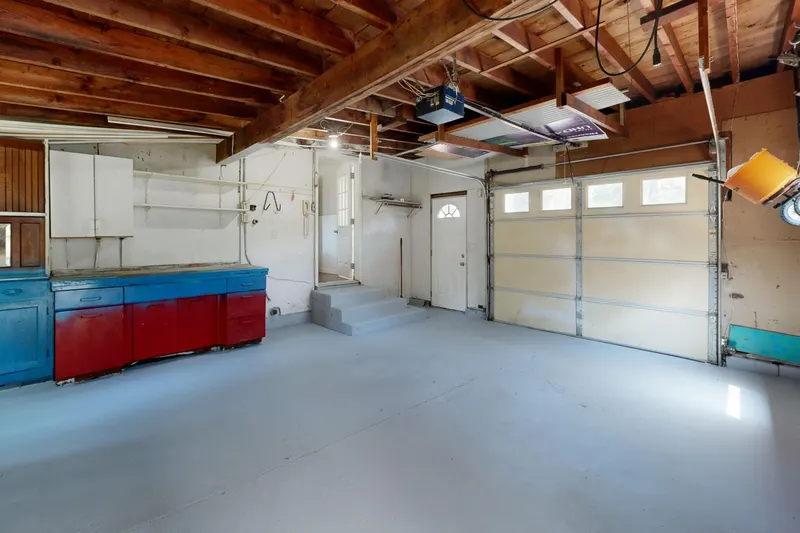
How to use the garage door manual release (and when not to)
The red cord on your garage door opener lets you open the door by hand in a power outage. Used the wrong way, it can drop a heavy door. Here is the safe order.
 Right now
Garage door opener not working? Check these first
Most dead openers come down to a handful of simple causes. Work through them in order before anything gets taken apart.