

Stuck right nowHome security
Safe won't open? Dead battery, lost code or a lock fault
Most safes that won't open have a tired battery, not a broken lock. Here's the order to check things in, how a lost combination is recovered, and when to call a safe technician.
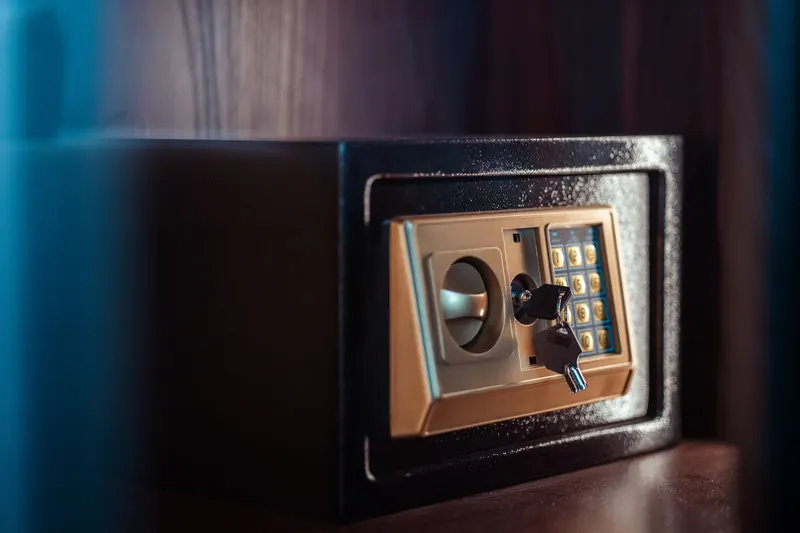
Here's the order to work through, with what the makers say, and when to stop and call for help.
Why are batteries the first thing to check?
Because they're the usual cause. SentrySafe's own support page says "most digital lock problems are related to low, dead or Non-Alkaline batteries" (SentrySafe). A tired battery can light the keypad and beep, then fail to drive the bolt, which looks exactly like a wrong code.
SentrySafe's battery advice:
- Use alkaline batteries from a reputable brand, not rechargeables or non-alkaline cells.
- Check the expiry date.
- Don't mix brands, or old and new batteries.
A safe kept in a cold garage, a detached shed or an unheated cottage over a Manitoba winter will drain its batteries faster, because batteries deliver less power in the cold. If your safe lives somewhere chilly, change the batteries every fall.
Where does the battery hide?
It depends on the model, and some are hidden on purpose. On SentrySafe models, the battery may be:
- behind a cover just below the keypad
- in a drawer on the side of the electronic lock
- behind the keypad itself, which turns and lifts off
- inside the door, so you can't reach it with the safe closed
If your battery is inside the door, look for a backup. SentrySafe lists some models with a 9-volt "battery auxiliary override" or a 9-volt slot on the outside, which powers the lock long enough to enter your code. The maker notes this shouldn't be used as a primary way of getting into the safe. Check your model number against SentrySafe's battery page or your manual.
Fit fresh alkaline batteries, all one brand. If the battery is inside the door, look for a 9-volt backup on the outside.
What about the override key and lockout delays?
The override key. Many electronic home safes have a mechanical override lock, often hidden behind a small cover or badge on the front. The key opens the safe with no power and no code. The catch: people store the key inside the safe. If yours is somewhere else, now's the time to use it, then put fresh batteries in straight away.
The lockout delay. Many electronic safe locks stop accepting codes for a while after several wrong entries, as a security feature. Pressing more buttons during the delay can keep it going. If you've tried a few codes, leave it alone for a while, then enter the right code once, slowly and carefully. Your manual says how long your model waits.
Leave it alone for a while, then enter the right code once, slowly. An override key opens it with no power and no code.
What if I've lost the combination?
Go to the maker first. They can usually look up or reset the combination from the safe's serial number, once you've proved it's yours.
- Find the model and serial number. They're usually on a label or stamped on the safe body; your manual or the maker's site shows where.
- Contact the maker. SentrySafe's Canadian replacement service asks for the model and serial number and verifies your identity before releasing a combination (SentrySafe Canada).
- Be patient. It isn't instant, which is part of the protection.
The identity check is there for a good reason. A safe holds passports, deeds, jewellery and sometimes firearms. A maker or a locksmith that would open one for anyone wouldn't be much use to you.
If you inherited the safe or bought a house with one left behind, you may not have the paperwork. Gather what you can: the deed or estate papers, and photo ID. A safe technician will also ask for proof that you have the right to open it.
Find the model and serial number and contact the maker. They verify your identity before releasing a combination.
When should I call a safe technician?
When the simple checks haven't worked, or the maker can't help. Call if:
- fresh batteries, the override key and a patient retry haven't worked
- the keypad is dead even with new batteries, or shows an error
- the handle turns but the bolt won't retract, or the dial spins freely
- the code is lost, there's no override key, and the maker route isn't possible
- the safe has been attacked, after a break-in, and the lock is damaged
A safe technician can usually open a home safe without destroying it, then reset the lock or fit a new one. Higher-security safes can take more work, and the technician should explain the options before starting. Our safe opening and service page explains how we handle it, including the proof of ownership we ask for.
This one is a call, not a fix.
A safe technician can usually open it without destroying the safe, then reset the lock or fit a new one.
Safe opening and serviceWhat if the safe was tampered with in a break-in?
Don't keep trying codes on a damaged keypad. Photograph the safe for your police report and insurance, then have the lock looked at. Our guide on what to do after a break in covers the rest of that day, including the doors and locks. If keys or codes went missing too, read should I change locks after losing keys.
This one is a call, not a fix.
Don't keep trying codes on a damaged keypad. Photograph it for police and insurance, then have the lock looked at.
Safe opening and serviceHow do I stop this happening again?
- Change the batteries every year, on the same date you check your smoke alarms.
- Store the override key outside the safe, somewhere secure that someone you trust knows about.
- Write the combination down and keep it in a separate safe place, such as with your will or a trusted person.
- Record the model and serial number now, with a photo, while the door is open.
Change the batteries every year, and store the override key outside the safe.
The short version
- Fresh alkaline batteries first.
- Then the override key, and wait out any lockout delay.
- Lost code: the maker can help, after proving ownership.
- Still stuck, or the lock has failed: a safe technician can usually open it without destroying the safe.
Questions people ask
- Why won't my safe open with the right code?
- Usually the batteries. SentrySafe says most digital lock problems come from low, dead or non-alkaline batteries, and a weak battery can stop the lock working even when the code is right. Other causes are a lockout delay after wrong entries, or a fault in the lock itself.
- How do I open a safe if I forgot the combination?
- Use the override key if your safe has one. If not, contact the maker with the model and serial number: SentrySafe, for example, verifies your identity before releasing a combination. If that isn't possible, a safe technician can open it and reset the lock.
- Can a locksmith open a safe without damaging it?
- Often, yes. Many home safes can be opened by a safe technician without destroying them, and the lock can then be reset or replaced. Some high-security safes need more work, and a good technician explains the options, and checks that you own the safe, before starting.
Still stuck? Call, and a person answers.
Open 24 hours, 7 days. Tell us which one it sounds like, or text a photo first.
Safe opening and service · You approve the price before we start.
Keep reading
All guides Right now
What to do after a break-in: the first 24 hours
A break-in turns an ordinary day upside down. Here is the order to do things in, from the first phone call to a door that locks properly tonight.
 Right now
Lost your house keys? Whether to change the locks, and what's quicker
Lost your keys and wondering if you need new locks? One question decides it, and rekeying usually means you keep the locks you have.
 Plan ahead
How to secure your front door from break-ins
Front doors are usually beaten at the frame, not the lock. Here is where to spend your effort, in the order that makes the biggest difference.