

Stuck right nowWinter
Garage door won't open in the cold? Five Winnipeg winter causes
Deep cold stops garage doors in five predictable ways. Here is how to tell which one you have, and which ones to leave alone.
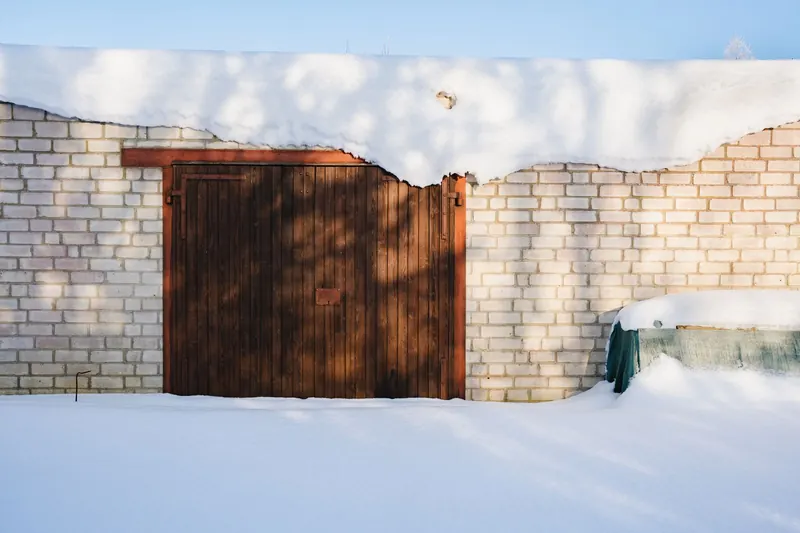
Here is how to work out which one you have, in the order that keeps you safe.
Is a spring broken? Check that first
Look up at the bar above the door. Many doors have one or two torsion springs on it. A broken torsion spring shows a clear gap in the coil, as if it had been cut, and it often goes with a loud bang you may have heard from the house. Older doors may have extension springs running along the side tracks instead.
If a spring is broken:
- Don't keep pressing the opener button. The opener isn't built to lift the full weight of the door.
- Don't try to lift the door by hand or pull the release with the door partly open. Chamberlain warns that with weak or broken springs the door may fall rapidly and without warning (Chamberlain).
- Never touch, adjust or unwind the spring, cables or brackets. They are under high tension.
The signs, and why springs go when they do, are covered in garage door spring broken. If the springs look whole, carry on.
This one is a call, not a fix.
Don't run the opener or lift the door, and never touch the spring, cables or brackets.
Garage door repairIs the bottom seal frozen to the floor?
This is the classic Winnipeg one. Snow melts off the car or blows under the door, pools along the threshold, and freezes the rubber seal to the concrete overnight. The opener hums, strains, maybe lifts the door an inch, then stops or reverses.
Garaga, a Canadian garage door maker, is clear on the first rule: don't use your electric opener on a door that is stuck in ice, because it can seriously damage the motor (Garaga). Then:
- With the door closed, pull the red release cord to disconnect the opener.
- Unlock any slide lock on the inside of the door.
- Gently tap along the bottom of the door with a hammer against a piece of 2x4, which cracks the ice without denting the panel.
- Scrape the remaining ice off the threshold with a plastic scraper, working along the floor rather than at the rubber.
- Dry the threshold so it can't refreeze.
Don't chip at the seal with a shovel or ice chopper. A torn bottom seal lets in more snow and water, which means more frozen mornings.
Stop pressing the opener. Pull the release with the door closed, tap the ice free with a hammer and a 2x4, then dry the threshold.
Has the cold thickened the grease?
Grease that is fine in September turns stiff at minus thirty, and dry rollers and hinges bind. The door feels heavy and jerky when you lift it by hand with the opener disconnected, or it squeals as it runs.
LiftMaster's guidance is to lubricate the rollers, bearings and hinges with white lithium grease, and not to grease the door tracks. A lubricant made for garage doors and rated for cold is the better choice before winter. How to do that properly is in how to winterize a garage door.
Lubricate the rollers, bearings and hinges with white lithium grease. Don't grease the tracks.
Is the opener stopping or reversing?
Openers have force and travel settings. Force is how hard the motor pushes before it decides something is in the way; travel is how far it runs. A door that is stiffer in the cold can trip the force limit, so the opener stops or reverses partway.
The temptation is to turn the force up. Don't. LiftMaster is explicit: never use force adjustments to compensate for a binding or sticking door, and never increase force beyond the minimum needed to close it (LiftMaster). Too much force means the door can crush something before it reverses.
The right order is: free the door, lubricate it, check the balance, and only then look at the opener. Any time the settings change, LiftMaster says to test the safety reverse, with the door reversing when it closes on a 1-1/2 inch object or a 2x4 laid flat.
Don't turn the force up. Free and lubricate the door first, then test the safety reverse after any change.
Is it just the remote or keypad battery?
Small batteries lose power in the cold, the same way a car fob does. Quick test:
| If this works... | ...but this doesn't | Likely cause |
|---|---|---|
| Wall button | Remote | Remote battery, or the lock function is on at the wall control |
| Wall button | Outside keypad | Keypad battery |
| Nothing | Nothing | Power, the breaker, a frozen door or a broken spring |
Change the battery, and keep a spare in the house. If the wall control has a lock button, make sure it isn't switched on; many lock out the remotes while the wall button still works.
Change the battery, and check the lock button on the wall control isn't switched on.
Car stuck inside? A word on the release and carbon monoxide
If the door won't open and your car is inside, the manual release lets you lift the door by hand, as long as the springs are intact and the door is fully closed when you pull the cord. The full steps are in garage door manual release.
While you wait, don't start the car to warm it up with the garage door closed. Health Canada advises against idling a vehicle in the garage even when the door is open, because carbon monoxide builds up and can seep into the house (Health Canada). Wait inside the house instead.
Use the release only with the springs intact and the door fully closed. Don't run the car in the garage to keep warm.
How do I stop it happening next time?
- Clear the threshold. Garaga suggests clearing snow in front of the door as soon as it falls, and knocking snow off the car before you pull in.
- Treat the bottom seal. Garaga recommends a silicone-based lubricant on the bottom weatherseal so it doesn't stick to the cold ground.
- Run the door daily. A door that moves at least once a day is less likely to freeze in place.
- Keep it closed. The door industry's own technical guidance notes that in extreme cold, doors should be kept closed where possible to protect the springs (DASMA TDS-190).
- Replace a cracked seal before the deep cold rather than after.
If the door is still stuck after the seal is free, the springs look odd, or the opener keeps reversing on a door that moves freely by hand, that's the point to call us. Garage doors are a 24/7 service: see garage door repair.
The free printable covers this, so you can tick it off once and keep it.
Questions people ask
- Why won't my garage door open when it's cold?
- Most often the rubber bottom seal has frozen to the concrete, or cold has thickened the grease so the door is stiffer than the opener expects. Weak remote batteries and broken springs are the other common winter causes. Check the springs first, because a broken spring changes everything you should do next.
- How do I unstick a garage door frozen to the ground?
- Stop pressing the opener button, pull the release cord with the door closed, and free the seal by hand. Garaga suggests gently tapping along the bottom of the door with a hammer against a piece of 2x4, then scraping away the leftover ice and drying the threshold so it can't refreeze.
- Can cold weather affect a garage door opener?
- Yes. A stiffer door takes more force to move, and many openers will stop or reverse because they read the extra resistance as an obstruction. The fix is to free and lubricate the door, not to turn the opener's force up.
Still stuck? Call, and a person answers.
Open 24 hours, 7 days. Tell us which one it sounds like, or text a photo first.
Keep reading
All guides Right now
Frozen car lock or door in Winnipeg: what to do (and why not hot water)
A frozen car lock is a Winnipeg rite of passage. Here is what actually works at minus thirty, what makes it worse, and how to stop it happening again.
 Plan ahead
How to winterize a garage door before a Winnipeg winter
An hour in October saves a stuck door in January. Here is the whole routine, in order, and what to leave to a technician.
 Plan ahead
Keys or fobs? Choosing access control for a small business
Cards, fobs and codes can be switched off the moment someone leaves, and they record who opened which door. Here's what a small business system involves and where to start.