

Stuck right nowLockouts
Does a locksmith break your lock to get you in?
Most house locks open without damage. Here's when drilling is genuinely needed, why reaching for the drill first is a warning sign, and what to ask before work starts.
That's worth knowing before you call, especially at 2am on a January night when you'd agree to almost anything to get inside.
How do locksmiths open a locked door without damage?
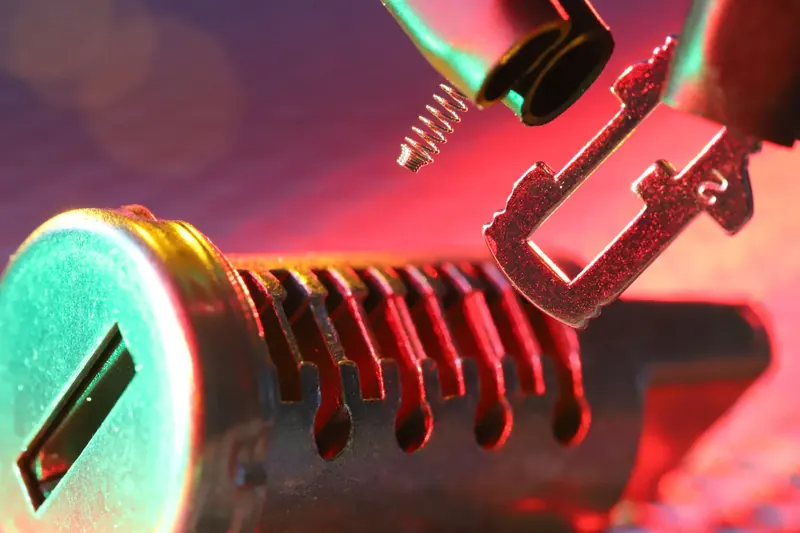
Most house locks in Winnipeg are pin tumbler locks: the cylinder holds a row of small spring-loaded pins, and the right key lifts each one to the right height so the cylinder can turn. A locksmith can do the same job without the key.
- Picking. A tension tool holds light turning pressure on the cylinder while a pick sets the pins one at a time. On a standard residential deadbolt or knob, an experienced locksmith usually gets there without leaving a mark.
- Bypass. Some locks can be opened without touching the pins at all, for example by working the latch rather than the cylinder, or through a gap the door already has. Which method fits depends on the lock and the door.
- Other non-destructive tools. Locksmiths carry a range of tools for specific lock types and situations. The aim is always the same: open the lock, leave it working.
Once the door is open, the lock should turn and lock exactly as it did before. Your key still works. Nothing needs replacing.
This one is a call, not a fix.
Most house locks open by picking or bypass, and the lock and your key work the same afterwards.
Emergency locksmithWhen is drilling genuinely needed?
There are honest reasons to drill, and a good locksmith will explain which one applies to you.
- The lock has failed inside. A broken cam, a snapped tailpiece or a cylinder that has come apart can't be picked open, because the mechanism no longer connects to the bolt.
- The cylinder is seized. Old, corroded or badly frozen locks can bind so hard that picking doesn't work. Winnipeg's freeze-thaw cycles and road salt carried in on boots and keys don't help.
- High-security cylinders. Some cylinders are designed specifically to resist picking and bypass. Opening them without the key can mean drilling, and that's part of what you paid for.
- A key is snapped deep in the lock. Usually the broken piece can be extracted, but now and then the cylinder is damaged enough that replacing it is the sensible route.
In every one of these cases, the locksmith should stop, tell you why, tell you what drilling will change (you'll need a new cylinder or lock), and wait for your answer before starting.
This one is a call, not a fix.
A failed, seized or broken-key lock can need drilling. The locksmith should tell you why and wait for your yes.
Emergency locksmithWhy is "drill first" a warning sign?
Because drilling turns a quick opening into a lock replacement, and that's a bigger bill. It's also one of the patterns in locksmith complaints across Canada.
CBC Calgary reported on a homeowner who was told her locks were too complex to pick and would have to be drilled. A locksmith she spoke to later told her that neither lock needed drilling (CBC News). Locksmiths quoted in the same report said that fake operators typically claim a lock has to be drilled, and that usually it doesn't.
The pattern is simple to spot: the person arrives, glances at an ordinary deadbolt, and says it's a special lock that has to be drilled, without trying anything else first. If that happens, it's fine to say no and ask them to leave. For the wider set of warning signs, see how to spot a fake locksmith.
If they haven't tried anything else first, it's fine to say no and ask them to leave.
What can I ask before the work starts?
You're allowed to ask questions, even when you're cold and tired. A real locksmith expects them.
- "How will you open it?" You want to hear picking or bypass first, not "I'll drill it."
- "If you need to drill, will you tell me first?" The only good answer is yes.
- "How is the price worked out?" Agree it before anything starts, and ask them to stop and check with you if it changes.
- "Can I see some ID?" And expect them to ask for yours. A careful locksmith asks for ID before opening a door. Why a real locksmith asks for ID explains what to have ready.
Our own approach is written down: we pick or bypass before we drill, and if a lock has to be drilled we tell you why before we touch it. If you need someone now, our emergency locksmith page has the call and text buttons.
Read this before you try anything else. Not sure? Call and we'll talk you through it.
Does an electronic lock change the answer?
Mostly not. Many keypad and smart deadbolts still have an ordinary key cylinder underneath, and that cylinder opens the same way as any other. If your problem is a flat battery rather than a lost key, try the lock's own backup first: our guide to a keypad door lock battery dead walks through the 9-volt and key options by brand.
Try the lock's own backup first, such as the 9-volt contacts or the key cylinder underneath.
What should I do after the door is open?
If you were locked out because your keys are lost, not just left on the kitchen counter, think about who might have them. A key that's missing with your address on the ring, or in a stolen bag with your licence, still opens your door. A rekey changes the inside of the lock so the old keys stop working, and you keep the hardware you have. Our post on should I change locks after losing keys covers that decision.
If the lock was already stiff, worn or loose before the lockout, now is a good time to mention it. A lock that's on its way out is often what causes the next lockout, usually in February.
If the lost keys could lead someone to your address, a rekey stops the old keys working.
The short version
- Most residential locks open without damage.
- Drilling is a last resort for failed, seized or high-security locks.
- A locksmith who drills first, without trying anything else, is a red flag.
- Ask how they'll open it, how the price works, and expect to show your ID.
Questions people ask
- Do locksmiths drill locks?
- Sometimes, but rarely as a first step. Drilling is for a lock that has failed inside, a seized cylinder, or some high-security cylinders built to resist picking. For an ordinary house lockout, a good locksmith picks or bypasses the lock first.
- Will a locksmith damage my door?
- Not usually. Picking and bypass methods work on the lock, not the door, and leave both working as before. If a lock has to be drilled, the cylinder is replaced, but the door itself should be fine.
- What should a locksmith do before drilling?
- Try non-destructive methods first, then stop and tell you why drilling is needed, what it will change and what a replacement involves, and wait for your yes before starting.
Still stuck? Call, and a person answers.
Open 24 hours, 7 days. Tell us which one it sounds like, or text a photo first.
Emergency locksmith · You approve the price before we start.
Keep reading
All guides Right now
Keypad or smart lock battery dead? How to get back in
A dead keypad deadbolt usually has a way back in: a key cylinder, two 9-volt contacts or a USB port. Here's how to find yours before you're standing on the step at minus 30.
 Right now
Why a real locksmith asks for ID before opening your door
A careful locksmith asks for ID before opening a home or car. Here's what to have ready, what happens when your ID is inside, and why being asked is a good sign.
 Plan ahead
Keys or fobs? Choosing access control for a small business
Cards, fobs and codes can be switched off the moment someone leaves, and they record who opened which door. Here's what a small business system involves and where to start.