

Stuck right nowLockouts
Why a real locksmith asks for ID before opening your door
A careful locksmith asks for ID before opening a home or car. Here's what to have ready, what happens when your ID is inside, and why being asked is a good sign.
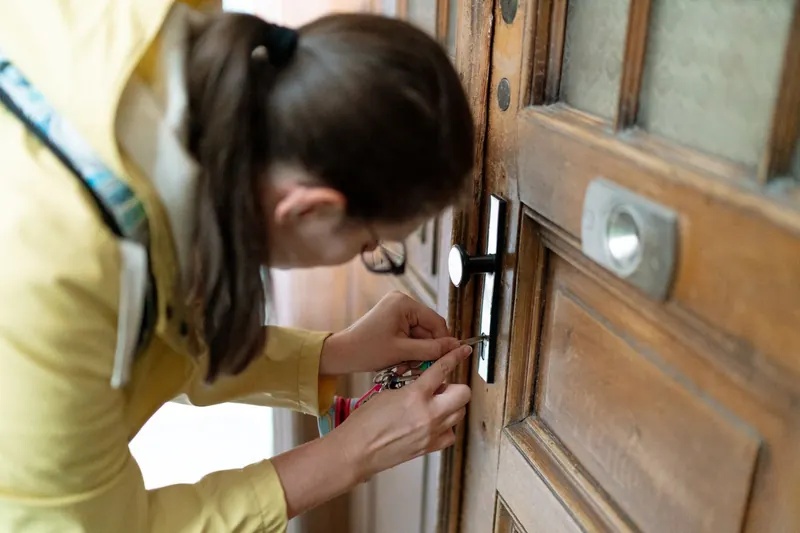
Here's what to have ready, how it works when your wallet is on the other side of the door, and how tenants, roommates and separating couples are handled.
Why does a locksmith ask for ID?
Because the check protects you. A locksmith who will open any door for anyone who asks will open yours for a stranger who says they've lost their keys.
Think about who calls a locksmith at night and says "it's my house":
- the person who lives there, which is almost everyone
- an ex-partner who moved out and wants back in
- a roommate's guest, or a former tenant
- someone who has watched the house and knows it's empty
The first one deserves a fast, friendly opening. The others are exactly why the check exists. Our promise is simple: we ask for ID before we open a home, a car or a business, every time, even when it's slow and you're cold. Being asked is a good sign.
What do I need to show?
For a home, your ID. That's it. A driver's licence or a Manitoba ID card is the usual one.
| Situation | What we ask for |
|---|---|
| House, condo or apartment | Your ID |
| Car or truck | Photo ID matching the registration or insurance |
| Business | Photo ID plus something that ties you to the business, or the owner or manager confirming by phone |
No pile of paperwork for a home lockout. Have your ID ready, or tell us on the phone if it's locked inside.
For a home, your ID, such as a driver's licence or Manitoba ID card. For a car, photo ID matching the registration or insurance.
What if my ID is locked inside the house?
This happens on most lockouts, so don't worry about it. Here's how it usually goes with us:
- On the phone, we ask your name and the address, and whether your ID is with you or inside.
- At the door, our technician opens it, starting with the gentlest method.
- Once the door is open, you show your ID inside, before we pack up. It takes a minute.
If you rent, try your building first. In a lot of Winnipeg apartment blocks, a caretaker or manager on call can let you in without a locksmith at all.
That's normal. You show your ID once the door is open, before we pack up.
Tenants, roommates and separations: who can let whom in?
These are the hard ones, and we don't take sides. Our job is to open a door for someone who has the right to be inside, not to settle a dispute.
- Roommates. If you live there, it works the same way as for anyone else: you show your ID.
- Tenants and landlords. In Manitoba, neither a landlord nor a tenant may change or interfere with the locks on a rental unit without the other's consent, and neither may refuse consent unreasonably (The Residential Tenancies Act, s. 53(2)). If you're in a dispute over who gets in, the Residential Tenancies Branch is the place to go, not a locksmith. Our guide can a landlord or tenant change the locks in Manitoba explains the rule in plain words.
- Separations. If a court order decides who lives where, that order decides who has the right to be inside. If you're unsure, or feel unsafe, contact the police first.
If you or someone in the home is in danger, call 911 before you call anyone else.
If anyone is in danger, call 911 first. A court order or the Residential Tenancies Branch decides who gets in, not a locksmith.
What about cars?
Same idea. A careful locksmith checks that the car is yours before opening it, usually with ID that matches the registration or insurance. If those papers are in the glovebox, the car is opened and the papers are checked before you drive away. On a dark Winnipeg parkade level at minus 30 that can feel fussy, but it's the same check that stops someone opening your car in the same parkade.
Have ID that matches the registration or insurance. If the papers are in the glovebox, they're checked once the car is open.
What should I think if a locksmith asks for nothing?
Be wary. A locksmith who doesn't ask for your ID is a locksmith who would open the door for anyone. It's one of the warning signs on our printable red flags card, alongside an unmarked vehicle, no company ID and wanting to drill before trying anything else. Does a locksmith break your lock explains that last one.
The check works both ways. Before you open your door to a locksmith, you can check them too: ask who is coming, ask for their ID, and call the company back on a number you found yourself. Our who's coming to your door page shows exactly how we do it, with a name and a door word before we arrive.
Be wary. Ask for their ID and call the company back on a number you found yourself.
Locked out by a dead keypad rather than lost keys?
Then you may not need a locksmith at all. Most electronic deadbolts have a backup, and our guide to a keypad door lock battery dead shows where to find it by brand.
Most electronic deadbolts have a backup way in. Find yours before calling anyone.
The short version
- A careful locksmith asks for ID before opening a home or car.
- For a home, your ID is what we ask for. For a car, ID that matches the registration.
- If your ID is inside, it's checked once the door is open.
- A locksmith who asks for nothing is a reason to be wary.
Questions people ask
- Do locksmiths need proof that I live there?
- A careful one asks for ID before opening a home, and that's what we ask for: your ID. It protects you, because the same check stops a stranger getting into your home.
- What if my ID is locked inside?
- That's common. The locksmith opens the door and then checks your ID inside, before packing up. It takes a minute.
- Can a locksmith open a car without proof of ownership?
- A careful one won't. For a car, expect to show ID that matches the vehicle registration or insurance. If those papers are in the glovebox, the locksmith can open the car and check them before handing it back to you.
Still stuck? Call, and a person answers.
Open 24 hours, 7 days. Tell us which one it sounds like, or text a photo first.
Who's coming to your door · You approve the price before we start.
Keep reading
All guides Right now
Does a locksmith break your lock to get you in?
Most house locks open without damage. Here's when drilling is genuinely needed, why reaching for the drill first is a warning sign, and what to ask before work starts.
 Right now
Keypad or smart lock battery dead? How to get back in
A dead keypad deadbolt usually has a way back in: a key cylinder, two 9-volt contacts or a USB port. Here's how to find yours before you're standing on the step at minus 30.
 Plan ahead
Keys or fobs? Choosing access control for a small business
Cards, fobs and codes can be switched off the moment someone leaves, and they record who opened which door. Here's what a small business system involves and where to start.